What we can create.
Eight categories developed to your specification. These are directions for a conversation, not a fixed catalogue — dimensions, finish, weight and branding are all open variables.
Reviewed 19 October 2026
KUBO Jewelry develops eight stainless steel jewelry categories: rings, necklaces and pendants, earrings, bracelets and bangles, charms, anklets, men's jewelry, and jewelry components such as chains, beads and clasps. Every category is produced to a buyer's specification with custom dimensions, PVD colour finishes, laser engraving and branded packaging.
Rings
Bands, signet rings, stacking rings and statement pieces in 304 or 316L stainless steel.
View category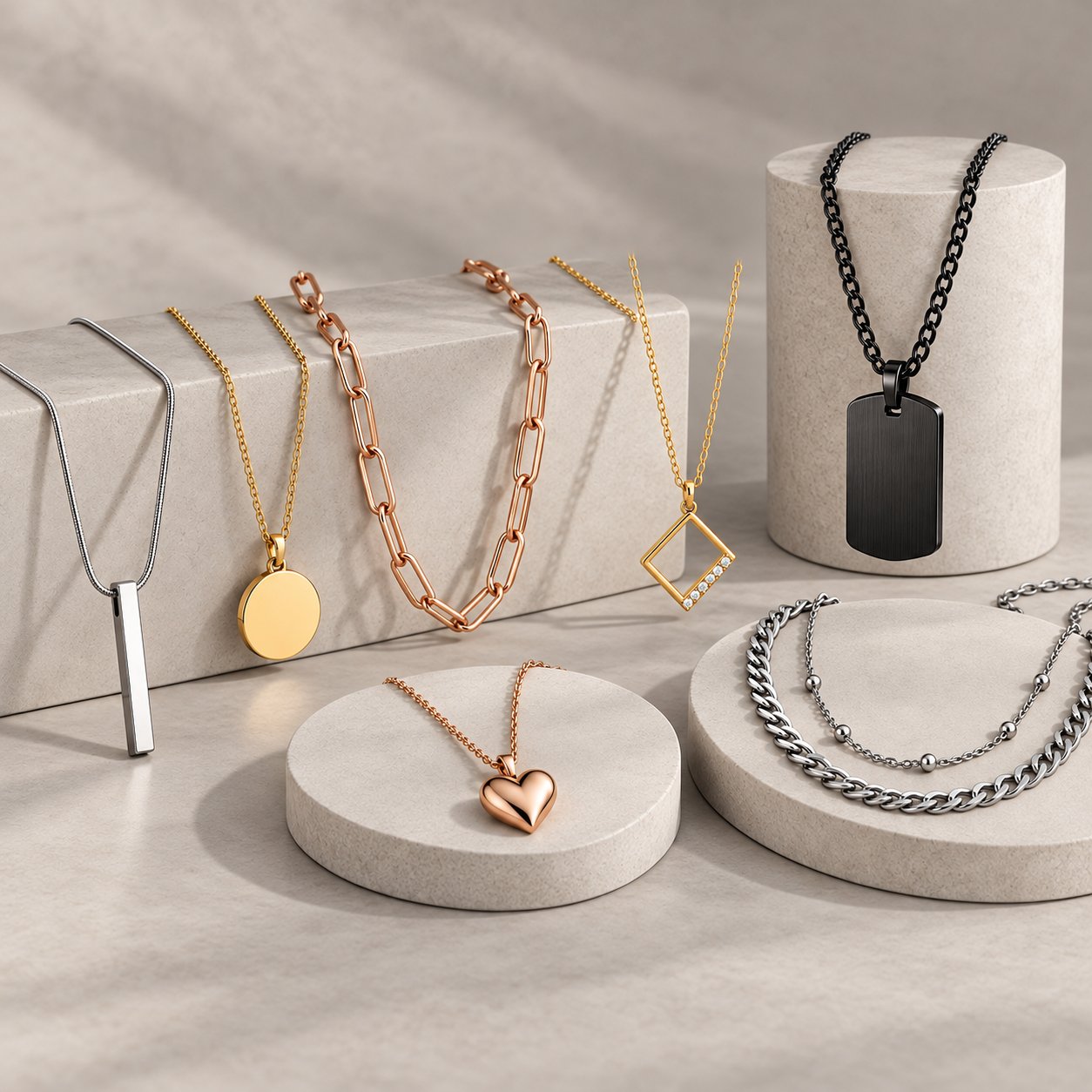
Necklaces & pendants
Chains, pendants, chokers and layered sets — matched so the chain and pendant arrive as one product.
View category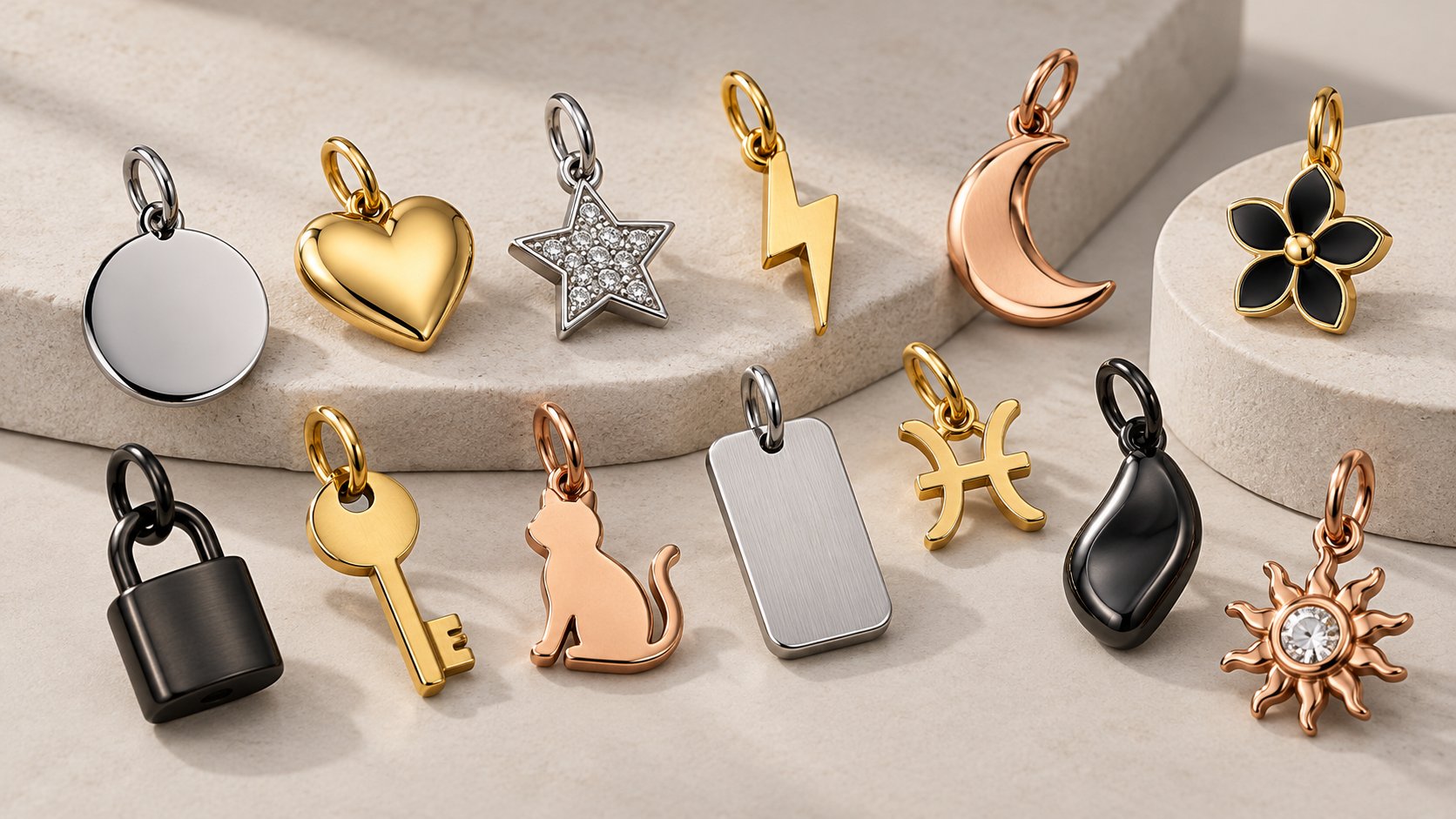
Earrings
Hoops, studs, drops and huggies — the category where metal grade and post quality matter most.
View category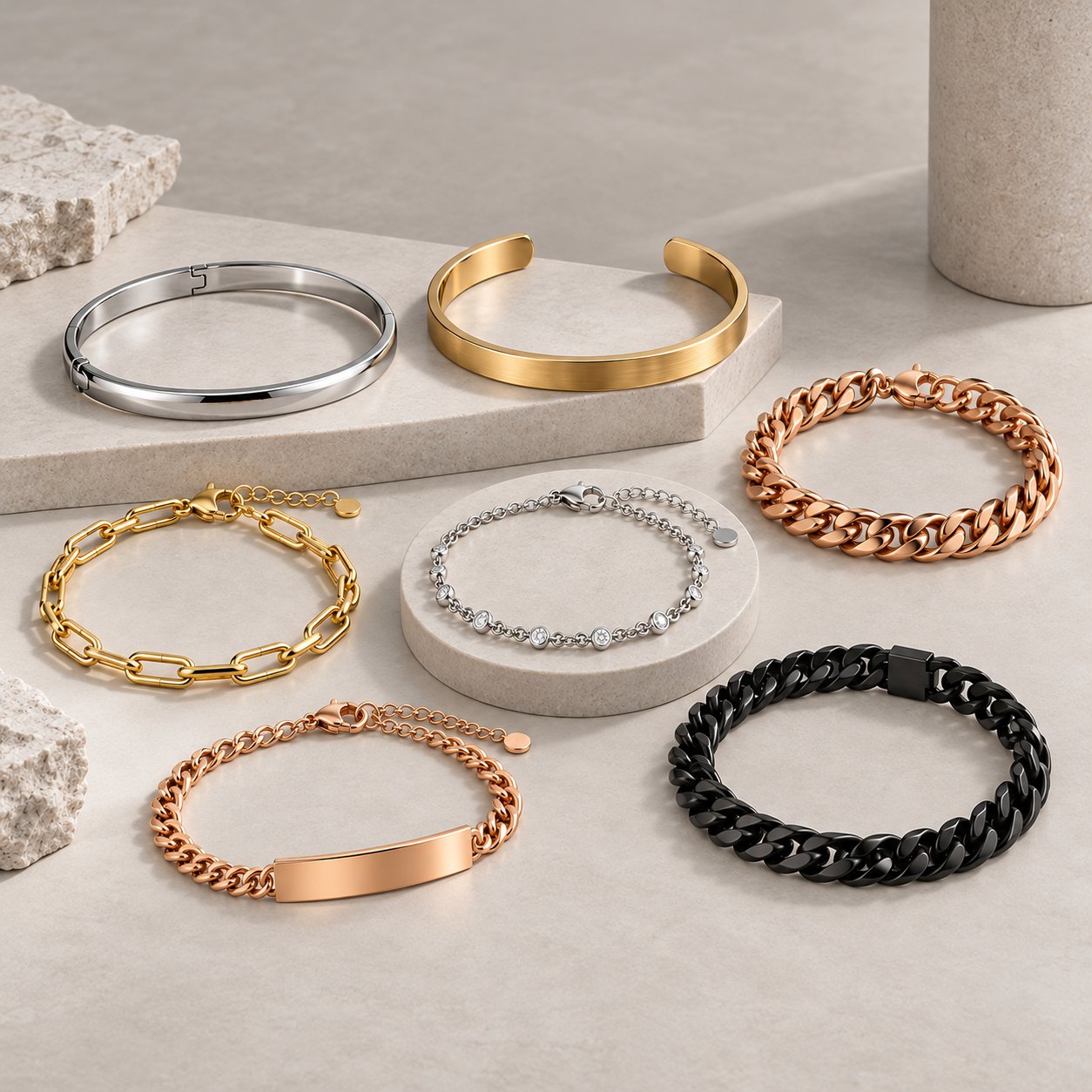
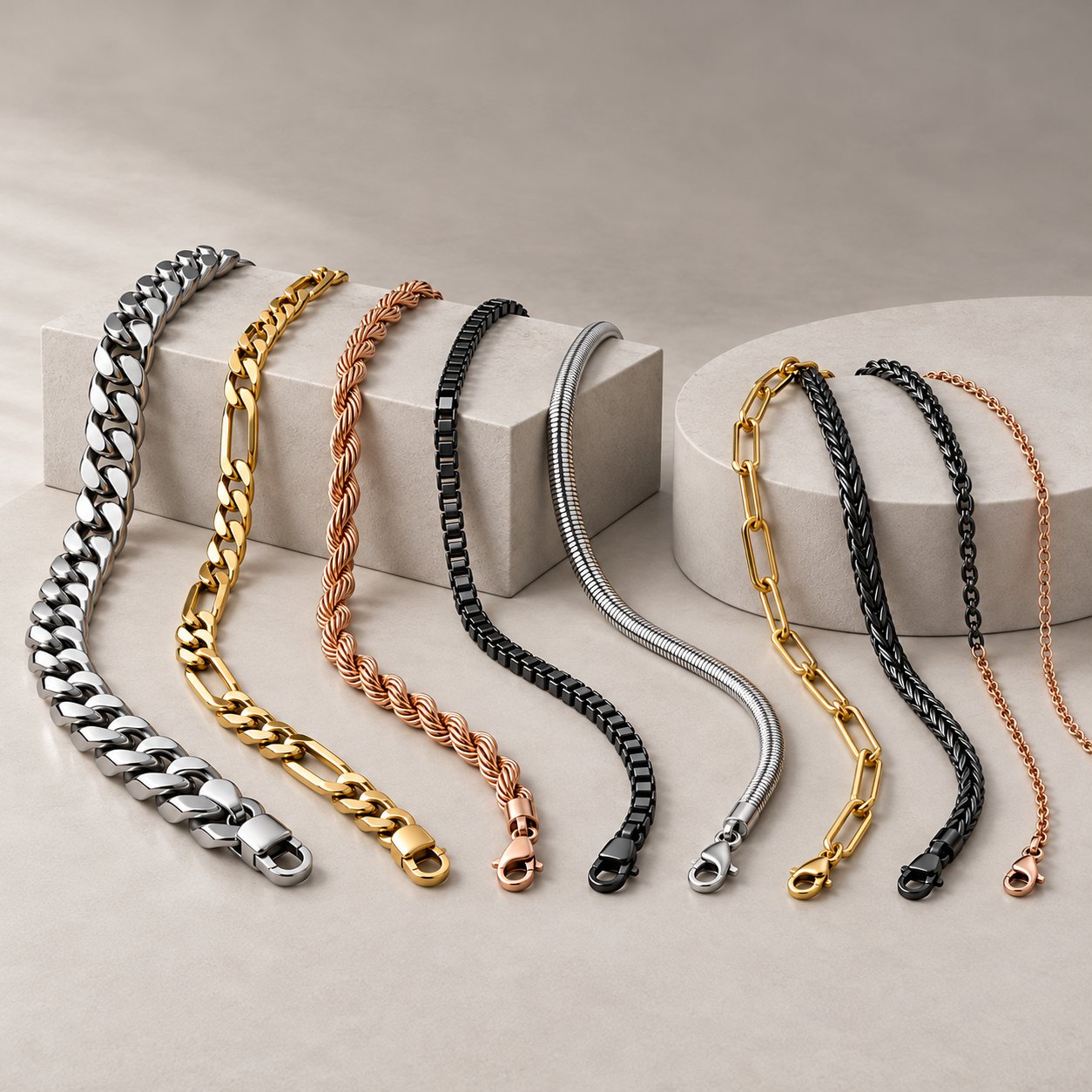
Bracelets & bangles
Chain bracelets, cuffs, bangles and tennis styles — sized for wrists, weighed for presence.
View category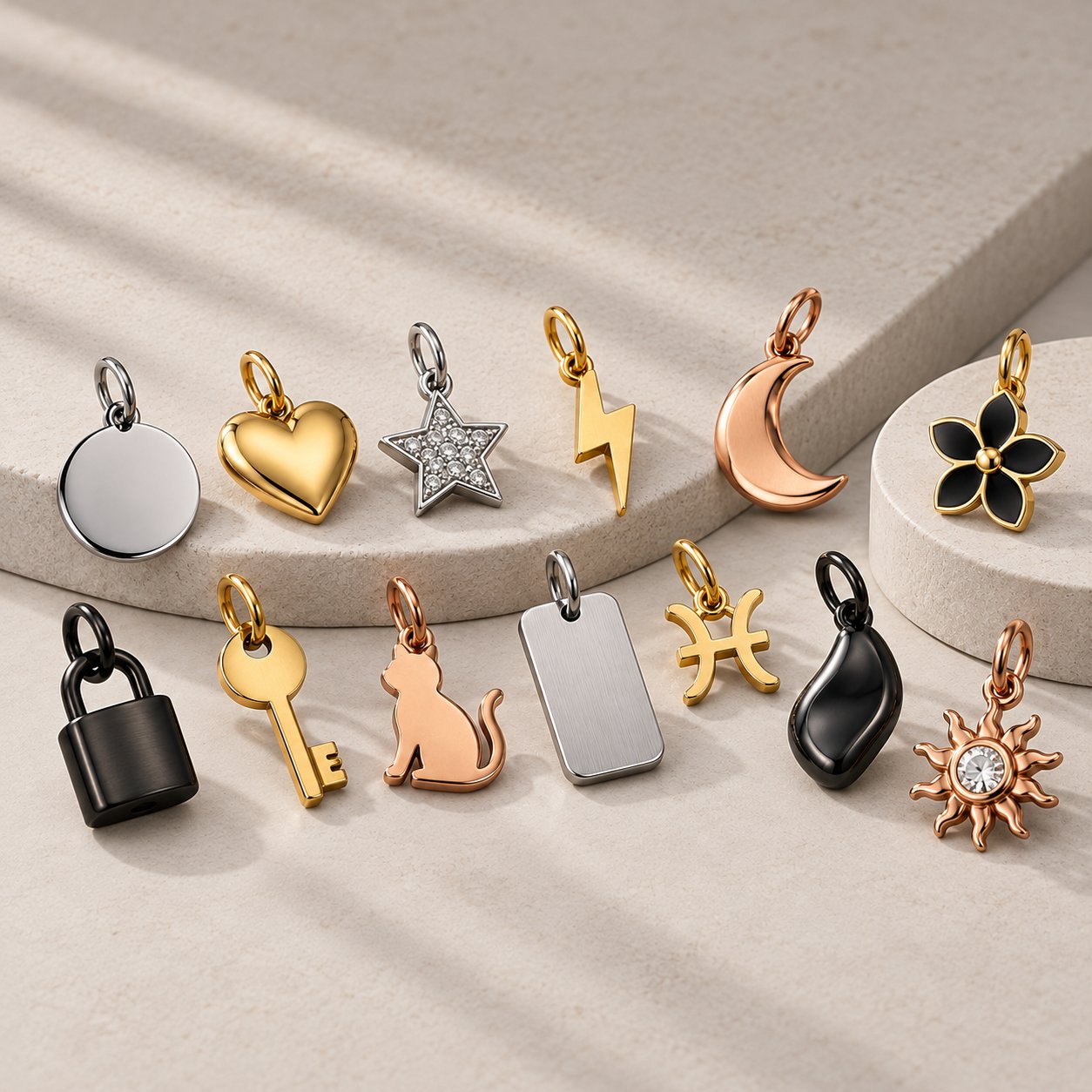
Charms
Letter, symbol and decorative charms — the lowest-tooling entry point into stainless steel.
View category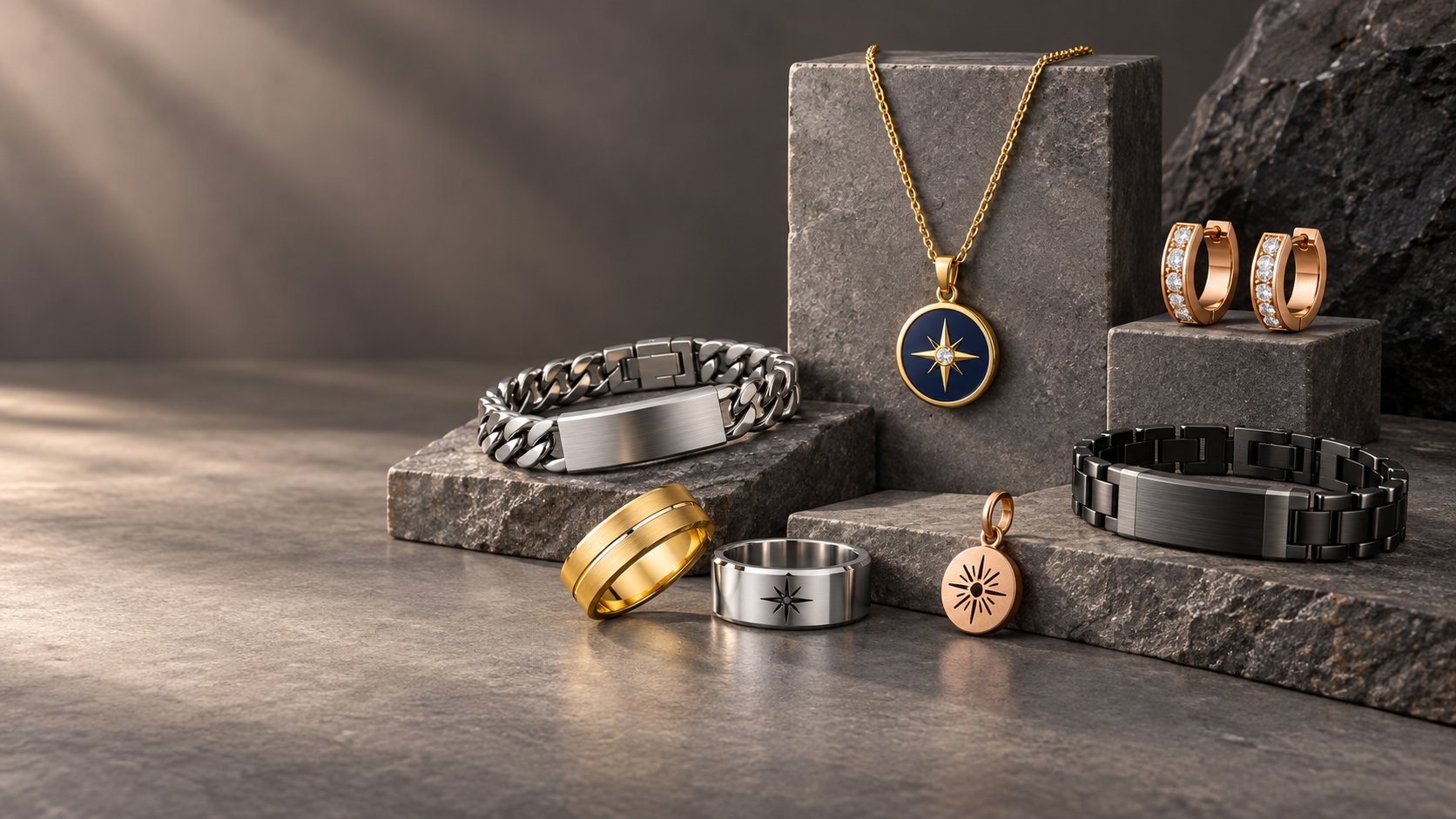
Anklets
Chain, bead and layered anklets — a seasonal category with unusually high repeat purchase.
View category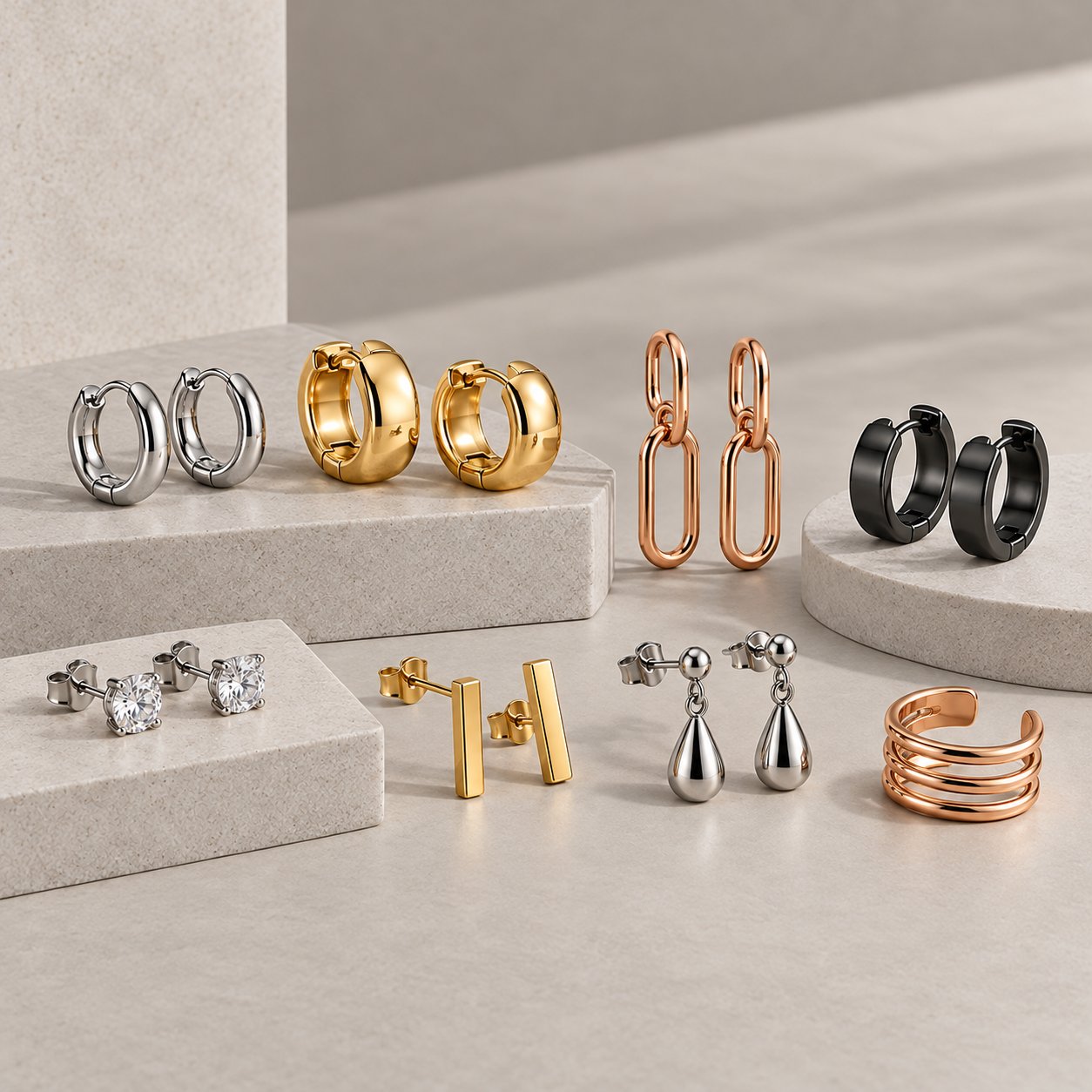
Components
Chains, beads, earring findings and clasps — the parts that decide whether the finished piece lasts.
View category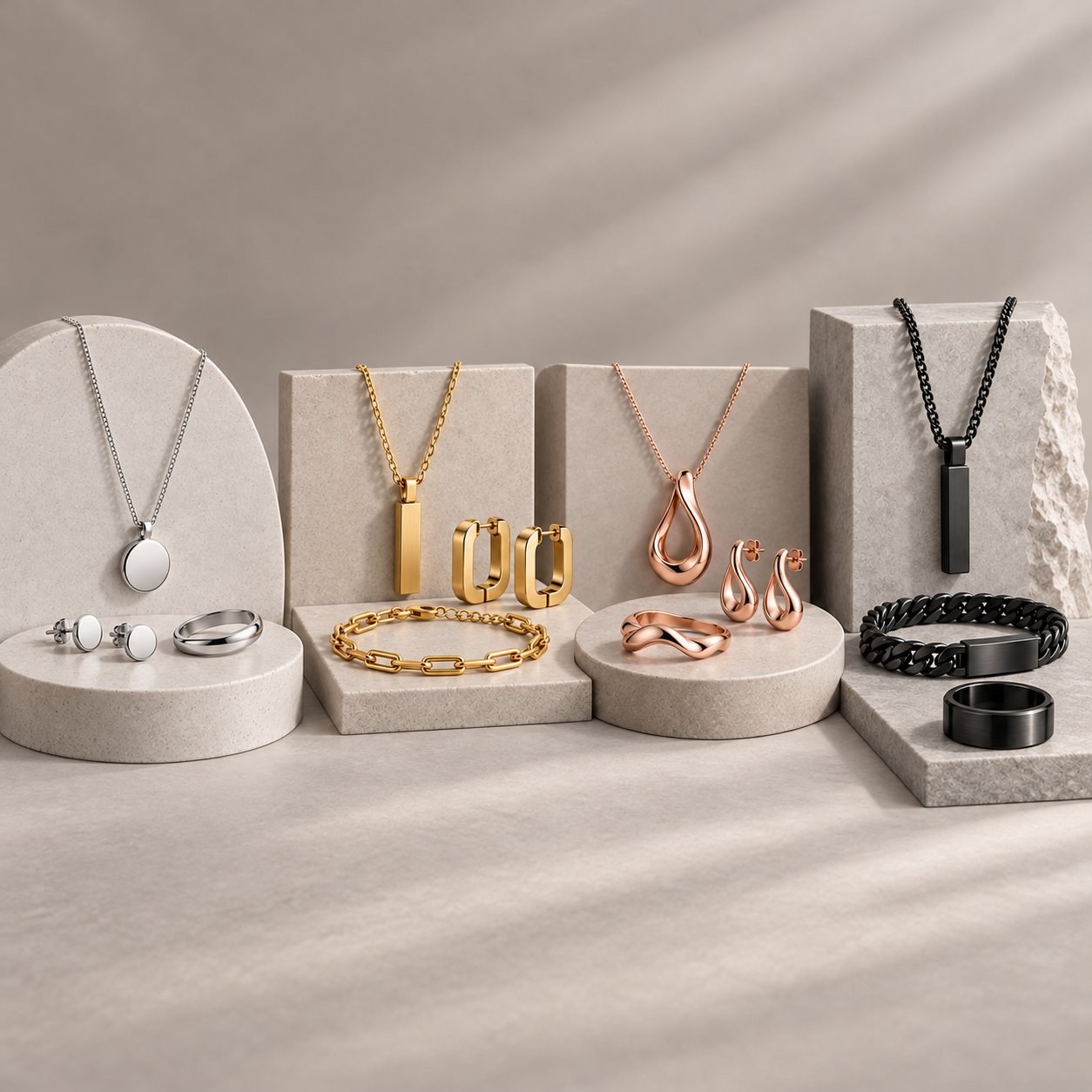
Men's jewelry
Signets, dog tags, heavy chains and blackened steel — the category where weight and finish carry the design.
View categoryEvery category below is developed on the same tooling base and passes through the same finishing and inspection process. Most collections combine two or three — a pendant and a chain, or a ring and a matching cuff — and it is usually cheaper to develop them together than separately.
Before you choose a category
Three variables drive cost more than anything else, and all three are yours to decide:
- Weight and wall thickness. A heavier piece costs more in material and takes longer to polish, but reads as premium in the hand. Most first collections under-specify this and end up with pieces that feel light against the competition.
- Surface finish. Mirror polish is the cheapest to execute and the hardest to keep clean in transit. Brushed and satin finishes hide fingerprints and handling marks, which matters for e-commerce photography and retail display.
- Clasp and component quality. The clasp is the part that fails first. On lower price points the temptation is to save there; it is almost always the wrong place to save, because a failed clasp becomes a return.
Where to start
If you are building a first stainless steel range, the lowest-risk entry points are earrings and charms — smaller pieces, less material, simpler assembly, and a faster path from sample to sale. Rings and heavy cuffs carry proportionally higher tooling and material exposure, so they are usually added once the first range has proven itself.
Not sure which category
your design belongs to?
Send the reference and we will tell you which production route it needs, what tooling it implies, and where the cost actually sits.
Request a quotation →