What brands use us for.
Five application types account for most of the briefs we receive — promotional and corporate gifting, personalization, logo-driven brand ranges, religious jewelry and memorial pieces. Each has its own production logic.
Reviewed 19 October 2026
KUBO Jewelry produces stainless steel jewelry for five main applications — promotional and corporate gifting (keyrings, badges, cufflinks), personalized jewelry (engraved names, dates, coordinates, fingerprints), logo-driven brand ranges, religious jewelry (crosses, medals, rosaries) and memorial jewelry (urns, lockets, ash pendants). All are produced in 304 or 316L stainless steel with laser engraving and PVD finishes.
The categories pages describe what shapes we make. This page describes why buyers order them, because the application changes the specification more than the shape does. A pendant engraved with a name and a pendant engraved with a corporate logo go through the same laser, but they carry different minimums, different artwork requirements and different quality risks.
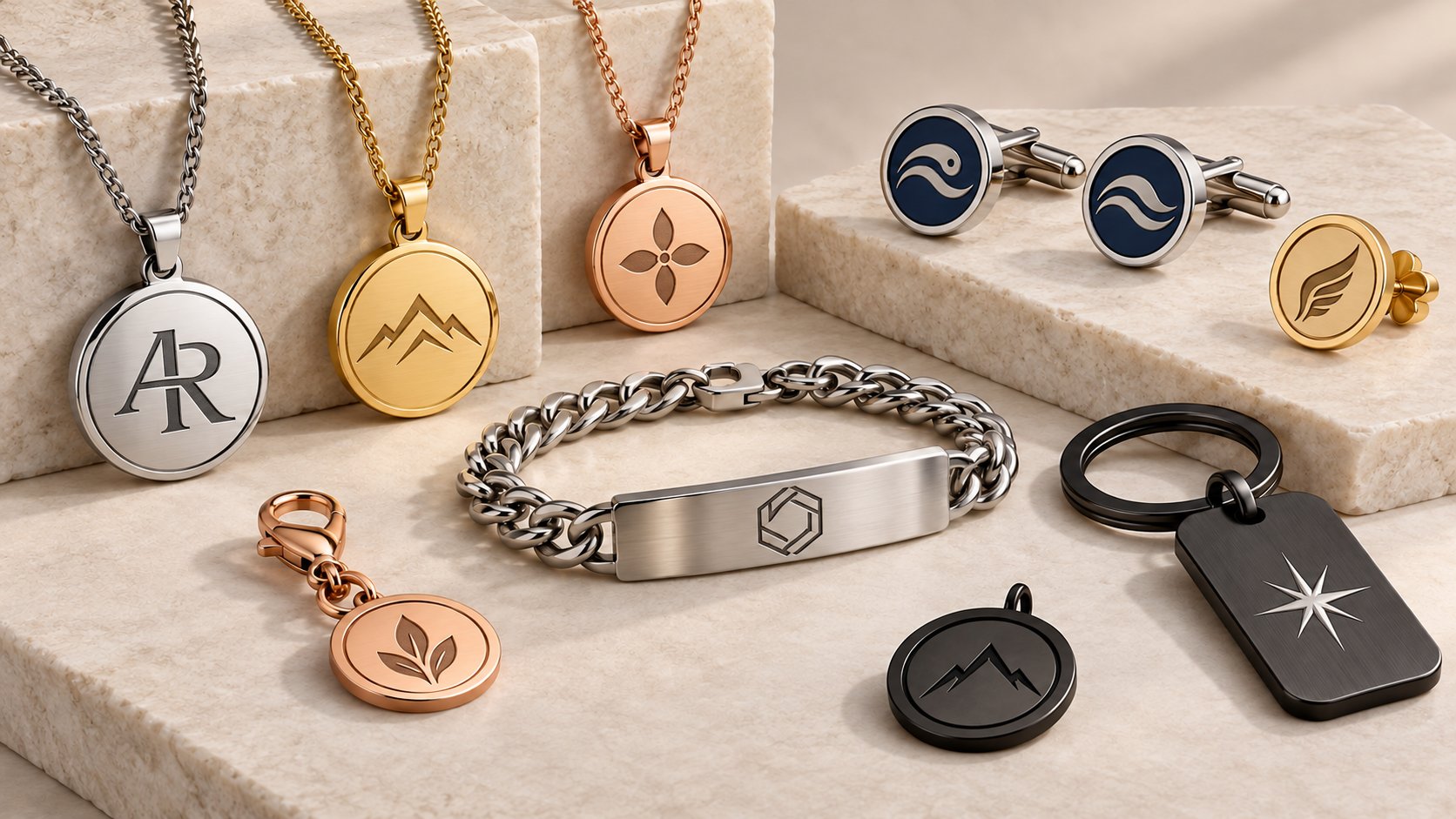
Promotional and corporate gifting
Keyrings, bottle openers, badges, cufflinks and pins. This is the application where unit cost dominates and where stainless steel is often chosen over zinc alloy for a specific reason: it survives use. A promotional keyring that still looks intact two years later is a better advertisement than one that lost its plating in six months.
What to set at the brief stage: the target unit cost per piece, the packaging format (a box, a card or a plain poly bag changes the logistics more than the piece does), and whether the mark is one colour or several. Multi-colour logos on steel mean enamel filling or PVD masking, both of which add a step.
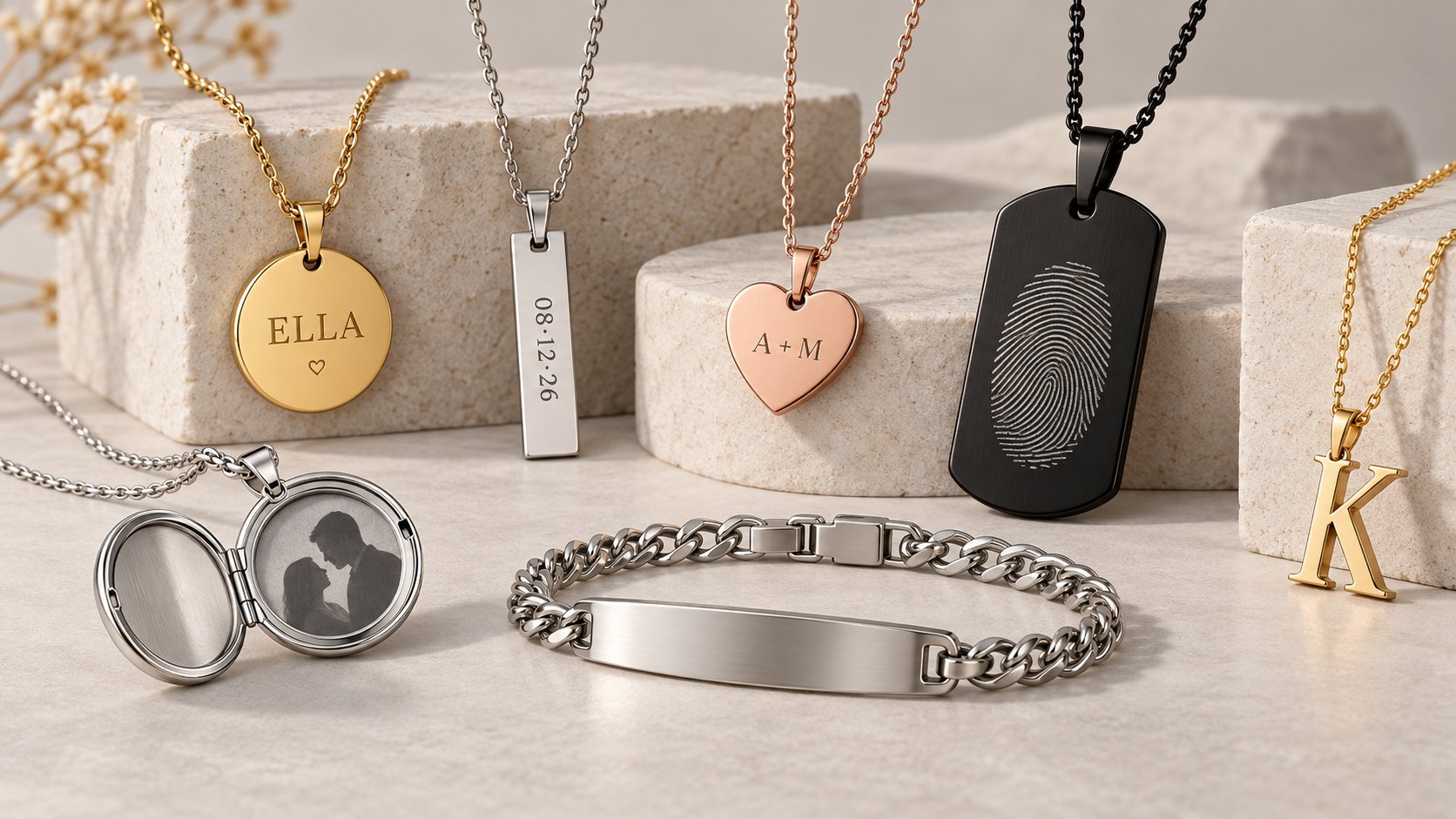
Personalization
Names, initials, dates, coordinates, handwriting and fingerprints. Personalization is the application most likely to break a production line, because it converts a bulk order into a set of individual orders that must not be mixed up.
Two things we ask before quoting: whether the personalization is applied by us or by you, and what the per-piece data looks like. A clean spreadsheet with one row per piece is workable. A list of names in an email is where errors come from — and errors in personalized goods cannot be resold, only remade.
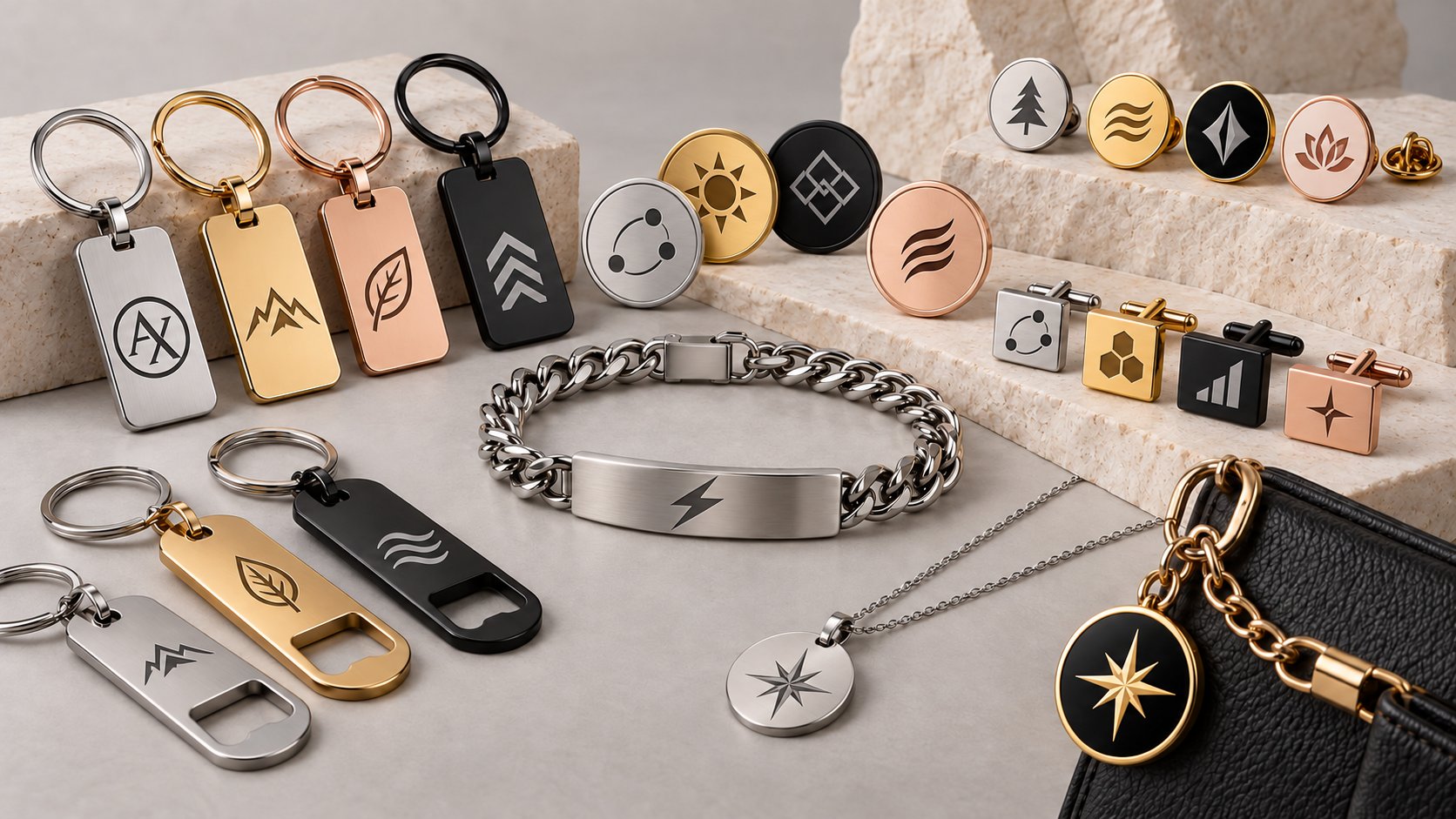
Logo-driven brand ranges
A brand mark repeated across pendants, bracelets, rings and cufflinks as one coherent range. This is closer to product development than decoration: the mark has to hold at 8 mm on a charm and at 25 mm on a pendant without redrawing.
The constraint buyers meet most often is line weight. A logo designed for print usually has hairlines that fill in at small engrave sizes. We will tell you where that limit sits for your mark before sampling rather than after.
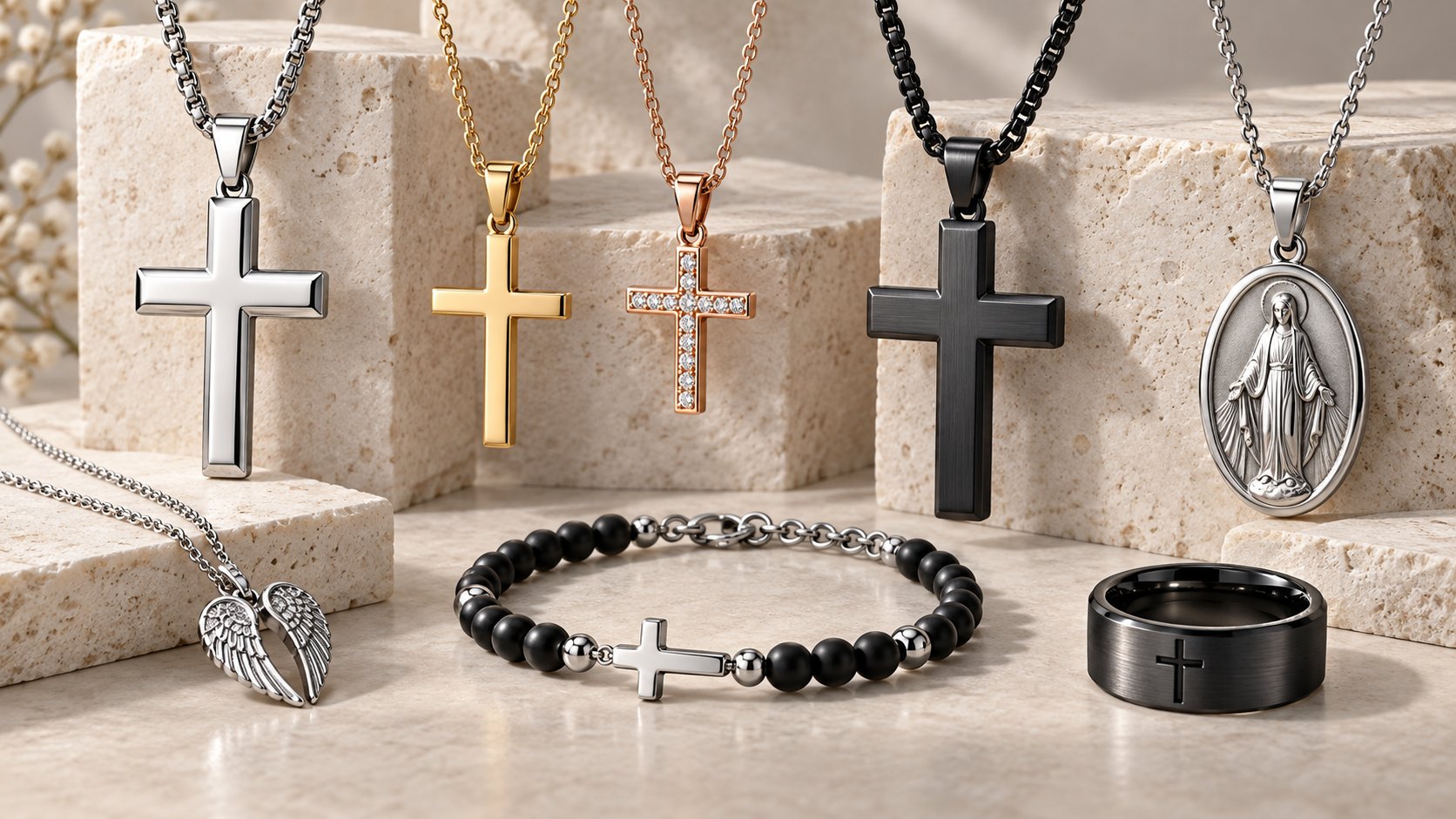
Religious jewelry
Crosses, crucifixes, medals, saint pendants, angel wings and rosary components. Demand is steady across Catholic, Orthodox and general Christian markets, with the Gulf and Southeast Asia adding their own motifs.
Two production notes. Fine relief detail — a face on a medal, for example — is a casting question rather than an engraving one, and the quality of the original model decides the result. And where a piece is intended to be worn against the skin continuously, the nickel-release question is worth raising at the brief stage rather than at customs.
Memorial jewelry
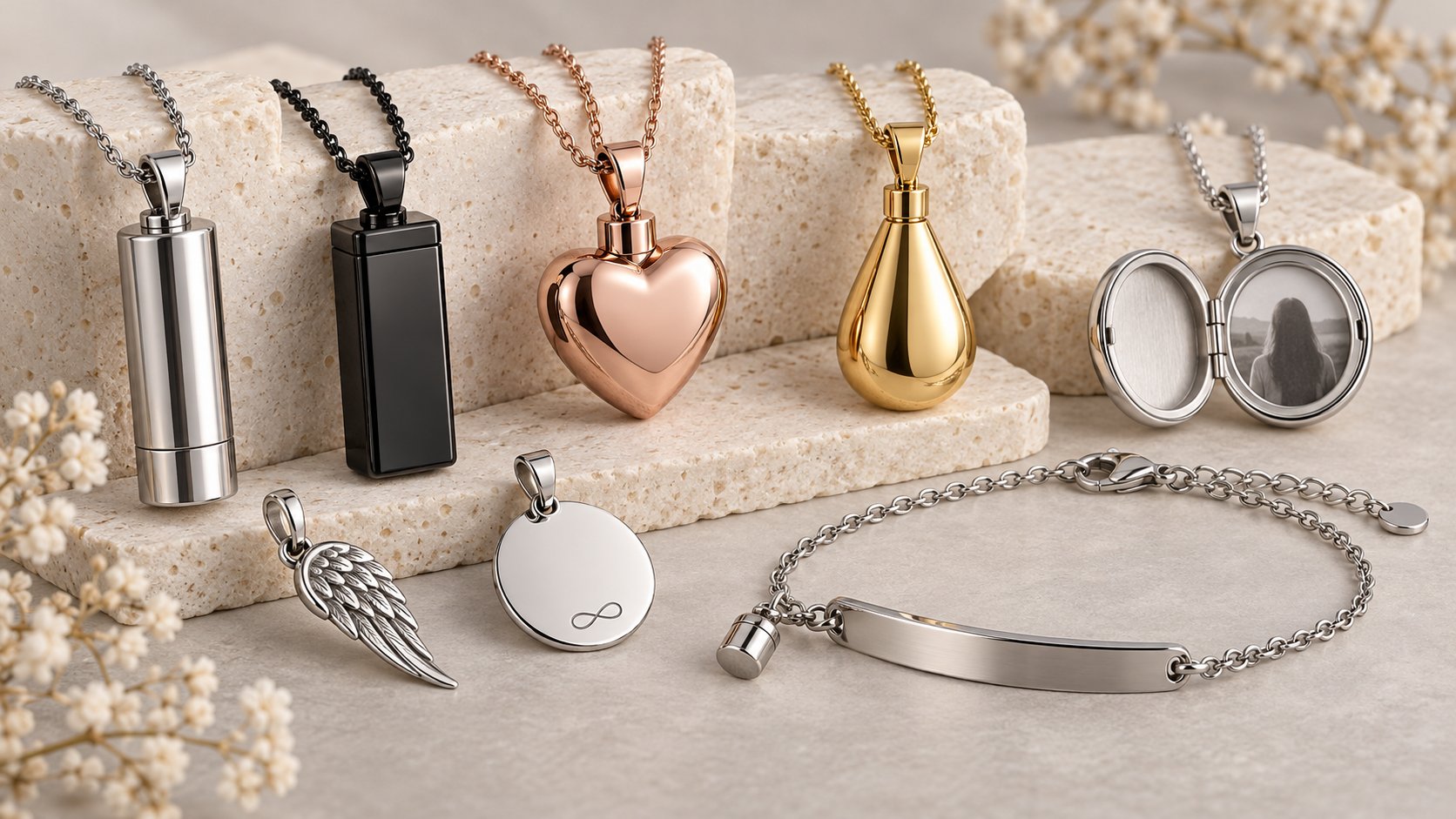
Urn pendants, ash holders, cremation lockets, hair keepsakes and engraved memorial bands. This is the application with the highest emotional weight and the lowest tolerance for error, and it is the one where we are most direct about what we will and will not promise.
What we make is the vessel: a threaded or screw-sealed compartment, correctly sized, with a seal that does not weep. What we do not claim is any certification of the sealing method beyond testing our own assembly — if your market requires a specific standard, name it and we will say whether we can meet it.
What all five have in common
They are all low-tooling routes into stainless steel. None of them requires a mould unless the shape itself is cast, and all of them can be produced in small quantities before committing to a full range. If you are testing a market or a concept, one of these five is usually the cheapest way to find out whether it works.