Custom development
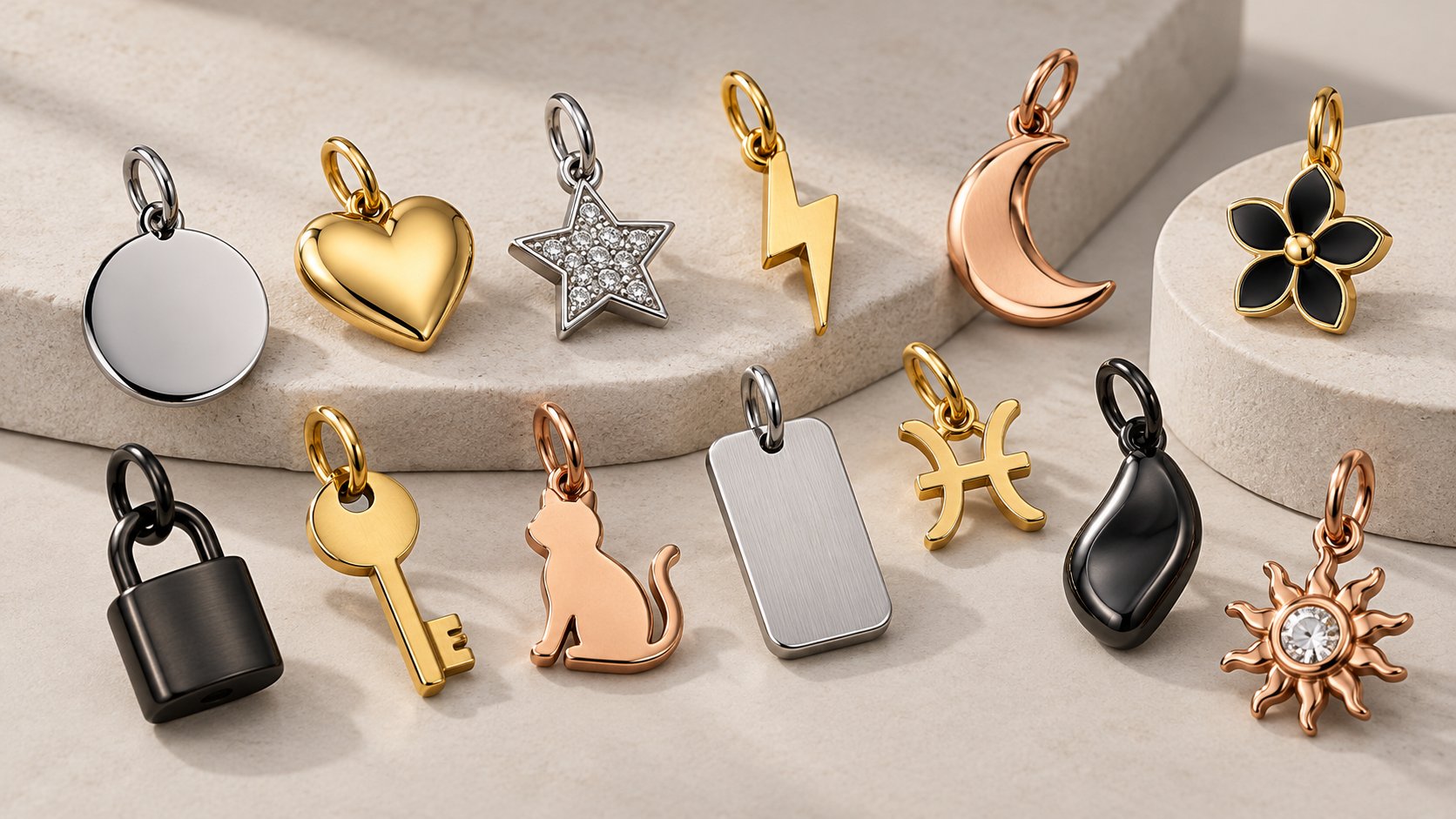
Custom stainless steel charms.
Letter, symbol, plaque and decorative charms. Low tooling, fast sampling, and the easiest category to build a collection around — which is why most first stainless steel ranges start here.
Reviewed 19 October 2026 · KUBO Jewelry, Guangzhou
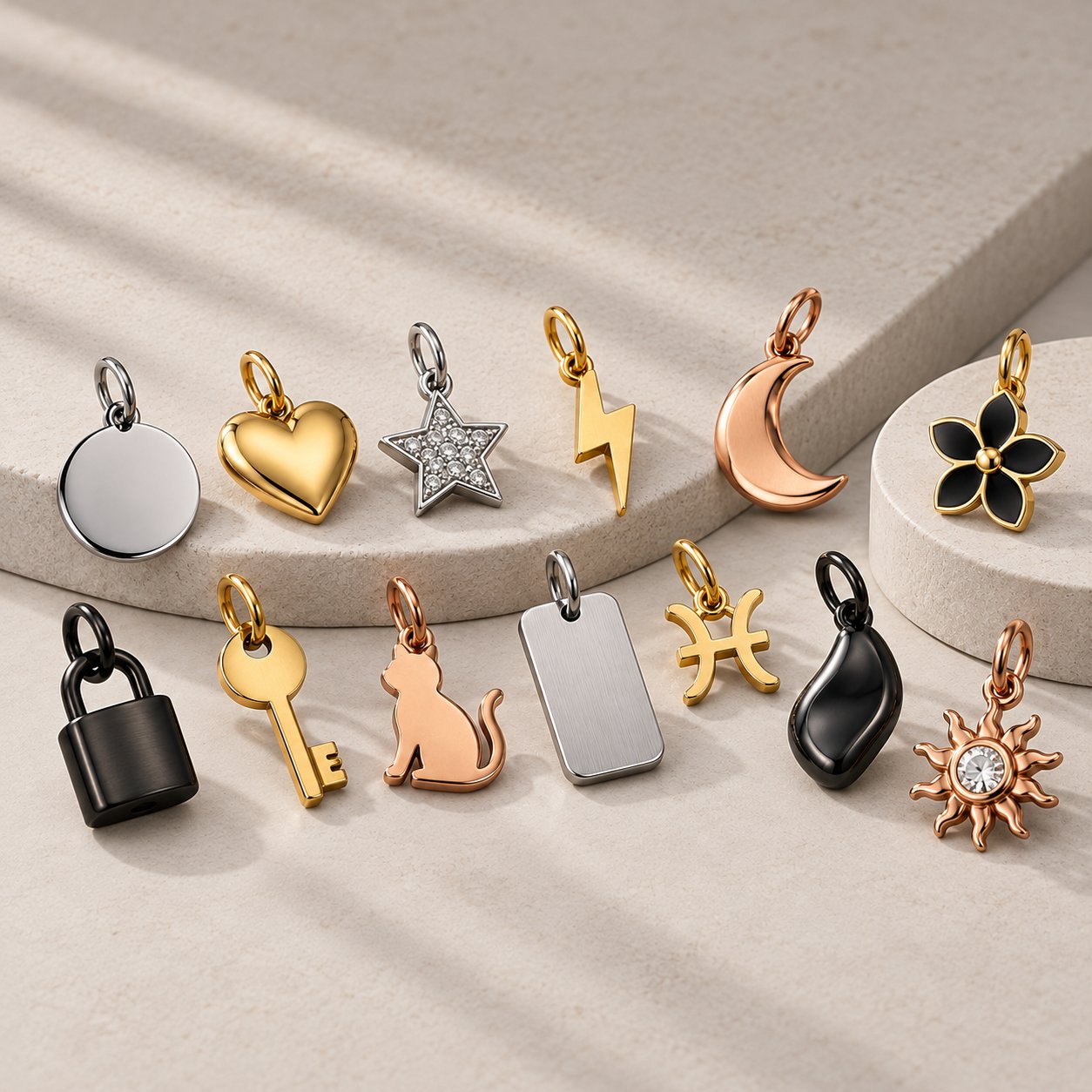
KUBO Jewelry produces custom stainless steel charms — letter, number, symbol, plaque, coin and enamel charms — in 304 or 316L, laser-cut or cast, from 6 mm to 30 mm, with engraved logos, jump rings and optional PVD colour coating.
Charms are the most efficient way to test a supplier. The piece is small, the tooling exposure is low, the sampling cycle is short, and the result tells you almost everything about how a factory polishes, engraves and inspects — at a fraction of the cost of a ring programme.
Two production routes, two economics
Laser cutting starts from flat sheet. There is effectively no mould cost, so a design can be sampled and revised without committing to tooling. The constraint is form: laser-cut charms are essentially two-dimensional, with detail carried by the cut profile and the engrave. Edge quality and polish matter enormously here, because there is nowhere else to look.
Casting allows true three-dimensional form — a relief, a sculpted letter, a contoured coin. It requires a mould, which raises both the tooling cost and the practical minimum quantity. For a design where the form is the idea, casting is the right route; for a design where the mark is the idea, laser cutting is almost always better value.
Letters and the problem of a full alphabet
Letter charms look simple and are not. A 26-letter set means 26 tools or 26 programme files, and the relative width of each letter — an "I" against an "M" — has to be optically balanced or the set looks uneven when the customer lays it out. If you are launching a letter range, decide at the brief stage whether widths are fixed (uniform, easier to stack) or optical (balanced, better looking individually).
Attachment is the failure point
A charm is a small object on a small ring, and the jump ring is what breaks. Two specifications worth agreeing early:
- Ring gauge against the charm weight. A 0.7 mm jump ring will open on a 4 g charm.
- Soldered or open. Soldered rings are permanent and appropriate for a finished necklace; open rings let the customer move the charm between chains, which is a selling point but a higher loss rate.
Enamel and colour
Soft enamel and hard enamel fills are available on flat laser-cut charms and are an effective way to carry brand colour. Note that enamel adds a process step and a minimum batch per colour, so a multi-colour design will have a materially different minimum quantity from a single-colour one.
| Specification | Options |
|---|---|
| Types | Letter, number, symbol, coin, plaque, tag, enamel |
| Material | 304 or 316L stainless steel |
| Size | 6 mm to 30 mm |
| Method | Laser cutting, stamping or casting |
| Thickness | 0.8 mm to 3 mm |
| Attachment | Jump ring, split ring, bail or rivet |
| Surface | Mirror, brushed, satin, sandblasted |
| Colour | Steel, gold, rose gold, black, gunmetal |
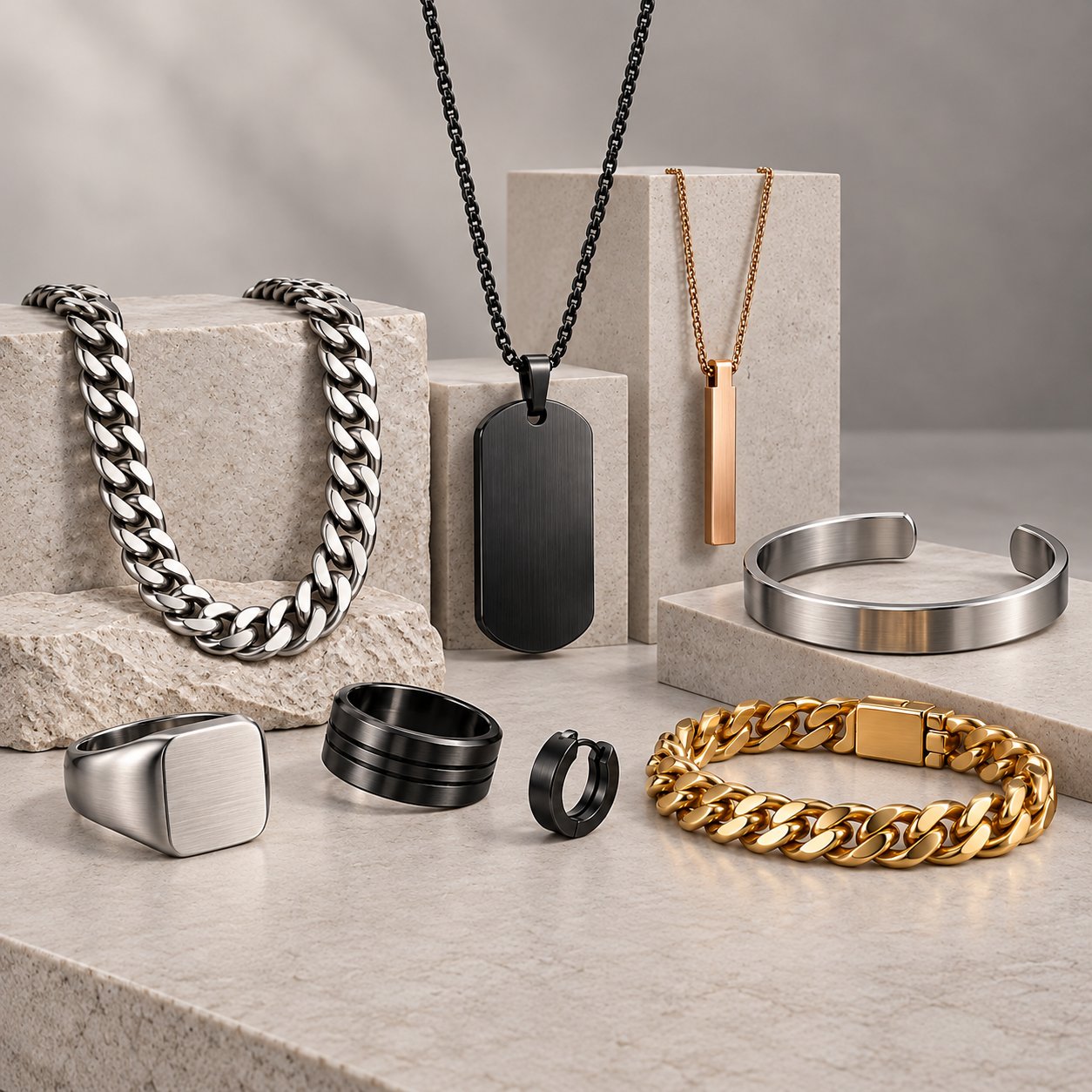
Laser-cut charms carry the lowest tooling cost and the shortest sampling time in our range. Cast charms allow more three-dimensional form but require a mould, which changes the minimum quantity significantly.
 {{#if wide_caption}}
Other categories
Continue exploring
The same tooling, finishing and QC apply across every category. Most collections combine two or three.
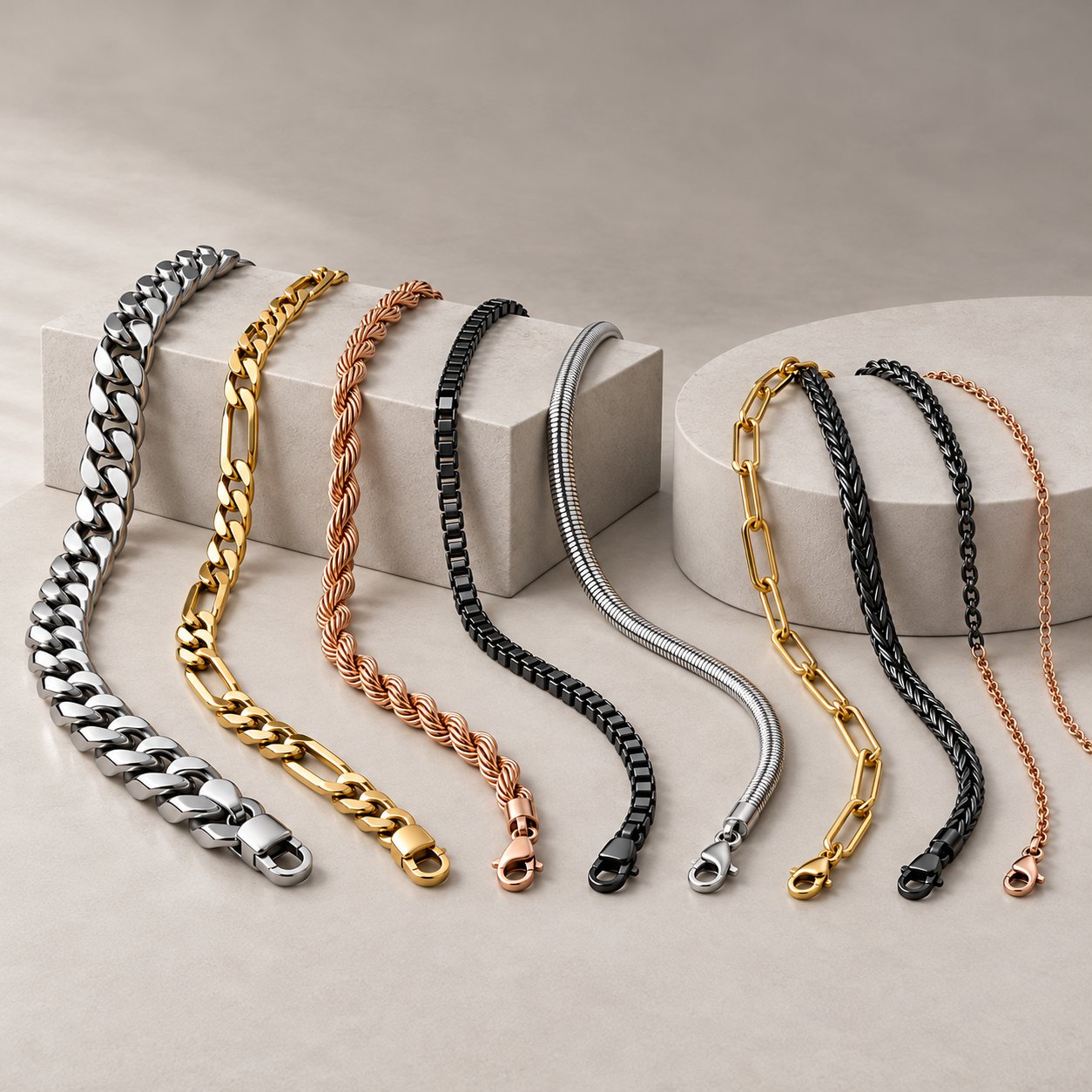
Rings
Bands, signet rings, stacking rings and statement pieces in 304 or 316L stainless steel.
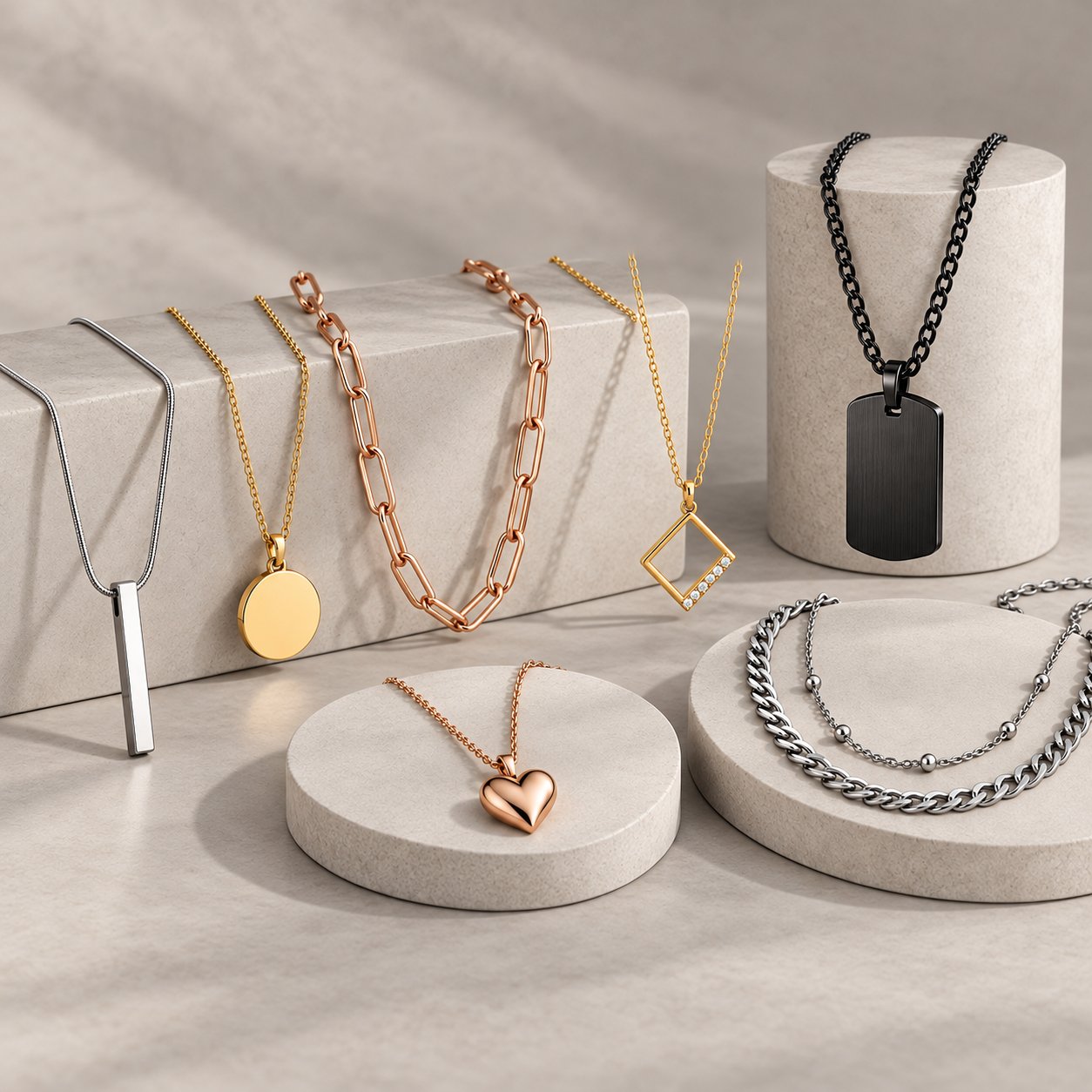
Necklaces & pendants
Chains, pendants, chokers and layered sets — matched so the chain and pendant arrive as one product.
Earrings
Hoops, studs, drops and huggies — the category where metal grade and post quality matter most.
Developing a new range?
Tell us the specification.
Send a drawing, a reference product or a written brief. We will reply with feasibility, a proposed sample timeline and the questions that matter for your price point.
Request a quotation →